Project Title: What’s the Matter
Role: Lead Curriculum / Instructional Designer
Target Audience: Middle school students 6th-8th grade learners
Tools Used: Articulate Storyline 360, Gemini for content outlining.
Project Duration / Scope: 1-2 Lesson to connect to molecule full lesson of two weeks
The Challenge
The Educational Gap: Students find learning about Matter to include only memorization and surface level understanding. They get lost in how proton count changes an element’s identity and struggle to make practical connections. The visuals I use will help those connections to become natural and clear up misconceptions.
Context and Background: This set of lessons was created to relate memorable visuals and interactive assessments for middle school aged children. It can however be simplified for even younger children.
Key Constraints: Time and Resources.
Learning Objectives and Framework
Measurable Objectives:
- Identify the structural components of an atom and their location in the nucleus. This section focuses on Protons and how they affect an atom. We start with a review of what should already be understood by students.
- Analyze each part of the periodic table chart and what the symbols mean. Cute “Proton character” to teach them the relationship between the proton and the atomic number.
- Predict how adding or removing protons alters an element’s identity and position on the Periodic Table.
- Finally, assess understanding with a fun quiz that involved various types of questions.
Alignment Standards: Utah State Standards
Instructional Strategy / Framework: Utilized Understanding By Design or Backward Design principles to align core atomic structure standards with interactive formative checks and summative assessments before developing learning assets.
Design and Development
Needs Assessment & Analysis: Scaffolding complex physical science concepts by breaking down subatomic particle relationships. This builds foundational conceptual understanding before learners are introduced to advanced molecular bonding.
Storyboarding & Prototyping: Mapped out wireframed multi-slide sequence for Articulate Storyline to include visual states and triggers. Include: click-and-reveal hostspots, dynamic state changes, and multi-format formative checks.
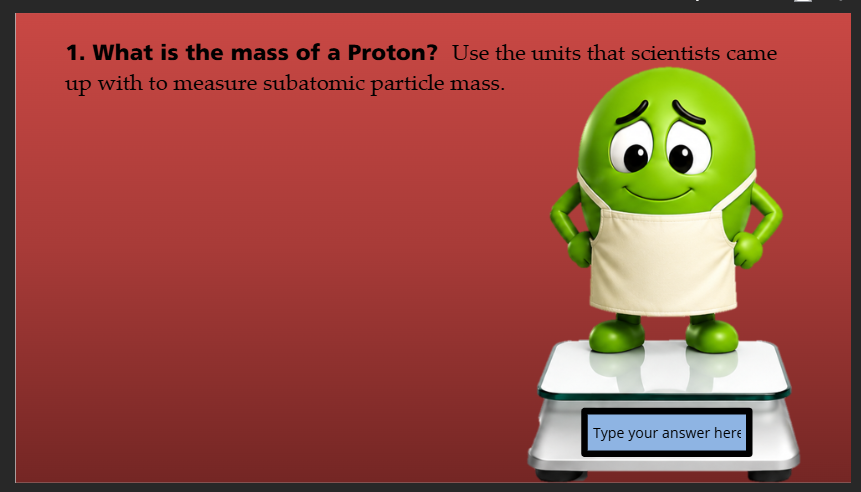
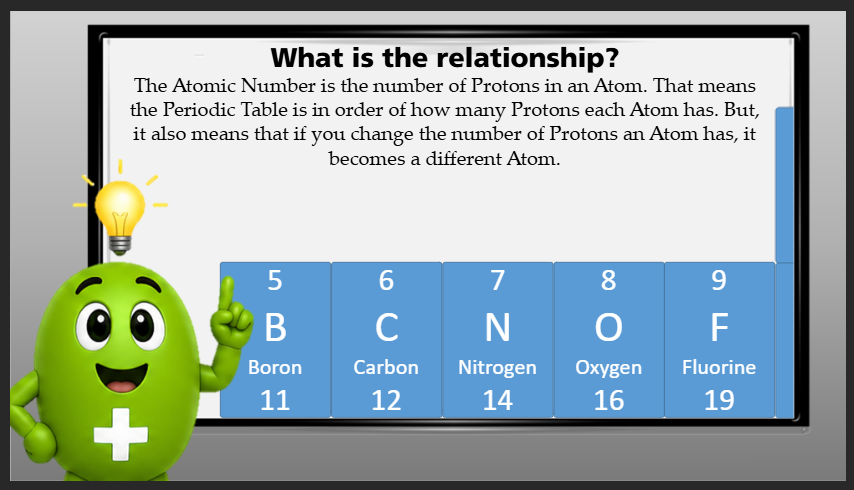
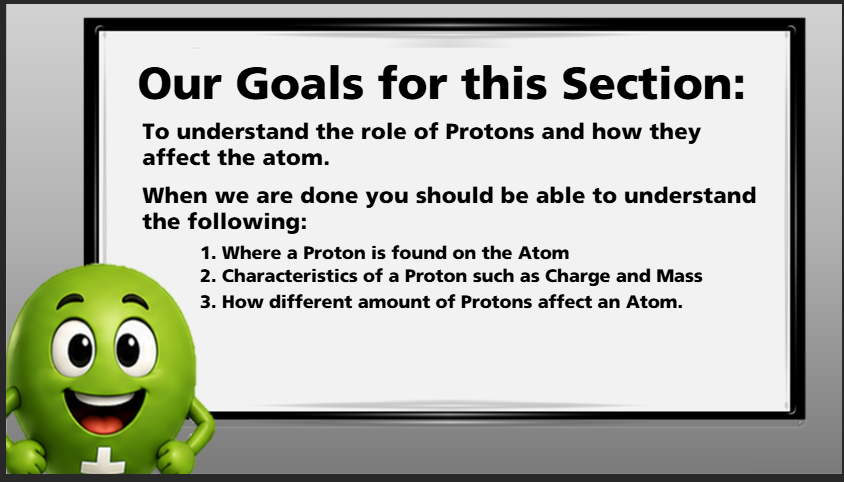
Interactive Elements and Engagement: This lesson was made with multiple interactive elements. The Periodic Table includes Click-and-Reveal elements to encourage active learning. I included a lot of Multi-State Assets or visual changes to represent the relationship between different elements. Finally, I added a Formative Knowledge Check with multiple choice, drag and drop and hotspot selection.
Assessment & Evaluation
Formative Assessment: Guided understanding through visual discovery. Example: hover over the Periodic Table elements and recognize any patterns. This allows for reflection before they are given an answer. I included a small formative assesment to test their understanding of the effect protons have on the atomic number.
Summative Assessment: There is an auto-graded evaluation of 5 questions at the end of this section to measure recall, and concept application.
Resources: The assessment will grade itself and students can retake quiz. Teachers would only need to answer questions for clarification.
Impact & Reflection
Results & Outcomes: Pilot testing results have been favorable. We would follow this lesson up with an interactive activity in the classroom.
Key Takeaways & Lessons Learned: I feel that the interactive part of this lesson worked very well. In the future I would organize my storyboard more exactly to improve time management.