
This project aligns with the Next Generation Science Standards
Middle School Engineering Design
- Students begin by planning out puzzles and clues considering things like time and cost.
- Repurposing teaches the students about ingenuity and problem solving as well as economic considerations.
- Students test out parts of their puzzles and clues to make sure they are reliable methods.
- Students build prototypes to test functionality.
Science and Engineering Practices
- The constructing of the physical mechanisms.
- Designing the artifacts to emulate real-world items.
- Using Mathematics and computational thinking to solve codes, ciphers, and logic puzzles.
Crosscutting Concepts
The physical design of the locks and artifacts.
Understanding how clues and storylines interact to create a cohesive escape room system.
Connecting how certain actions work to create a specific outcome.
Project Based Learning Application
The escape room is one of many project-based learning examples from my leadership and science curriculum. It is a multi-week and multi-faceted curriculum. The question was: How do we create an immersive escape room experience with limited time, money, resources using our STEM skills and artistic ingenuity.
Various Puzzles
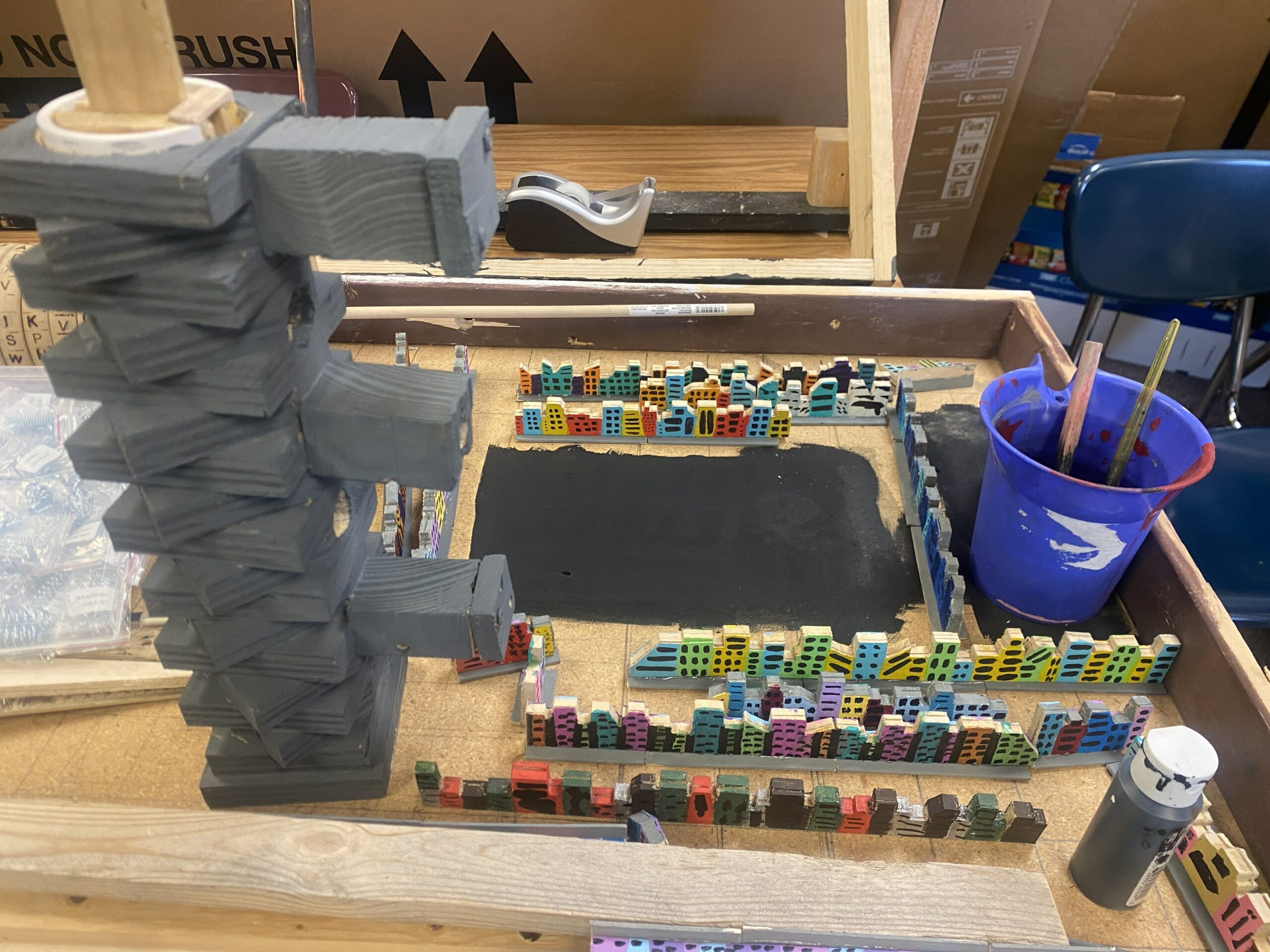
Town Maze in Progress
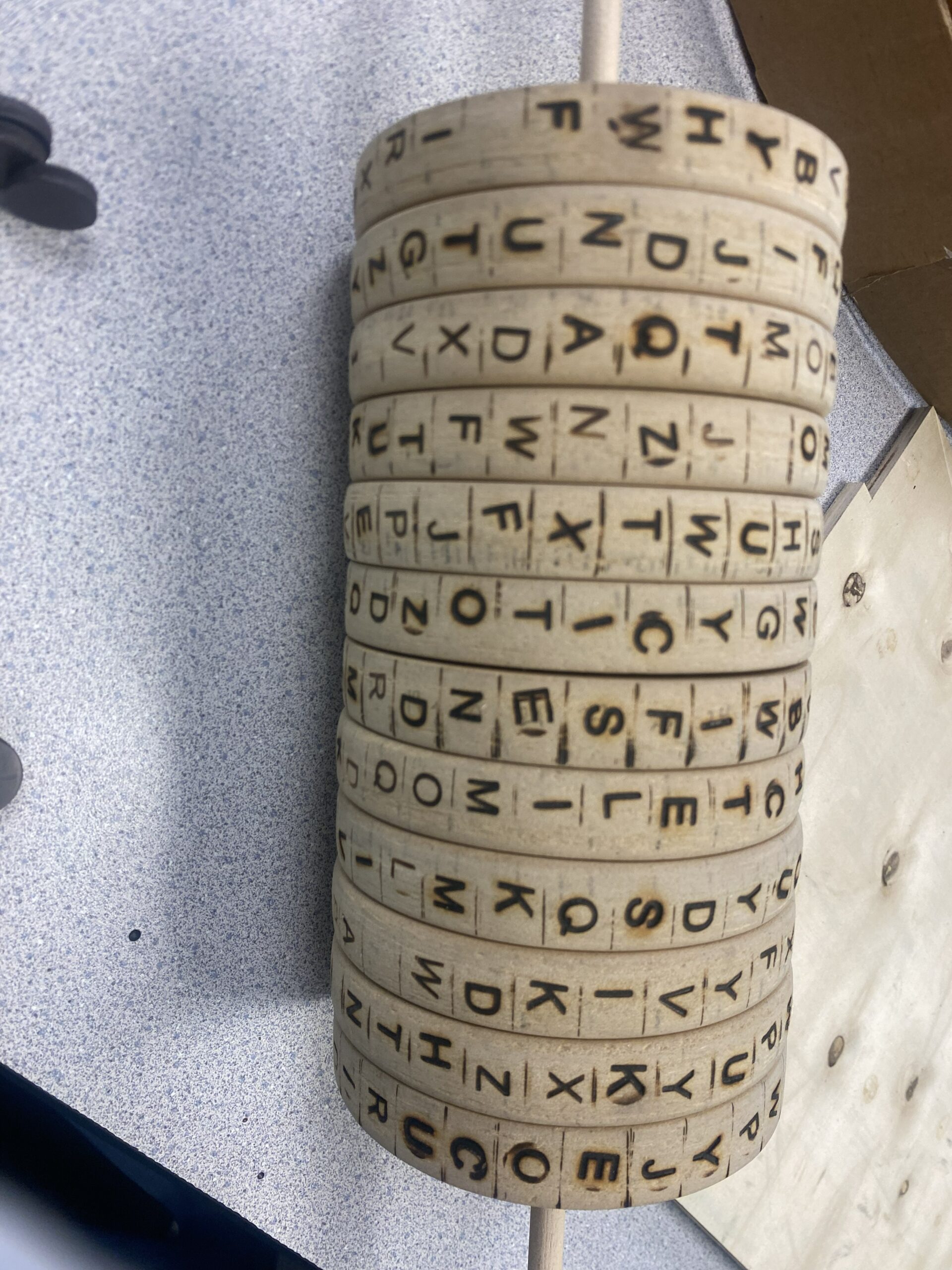
Jefferson Wheel
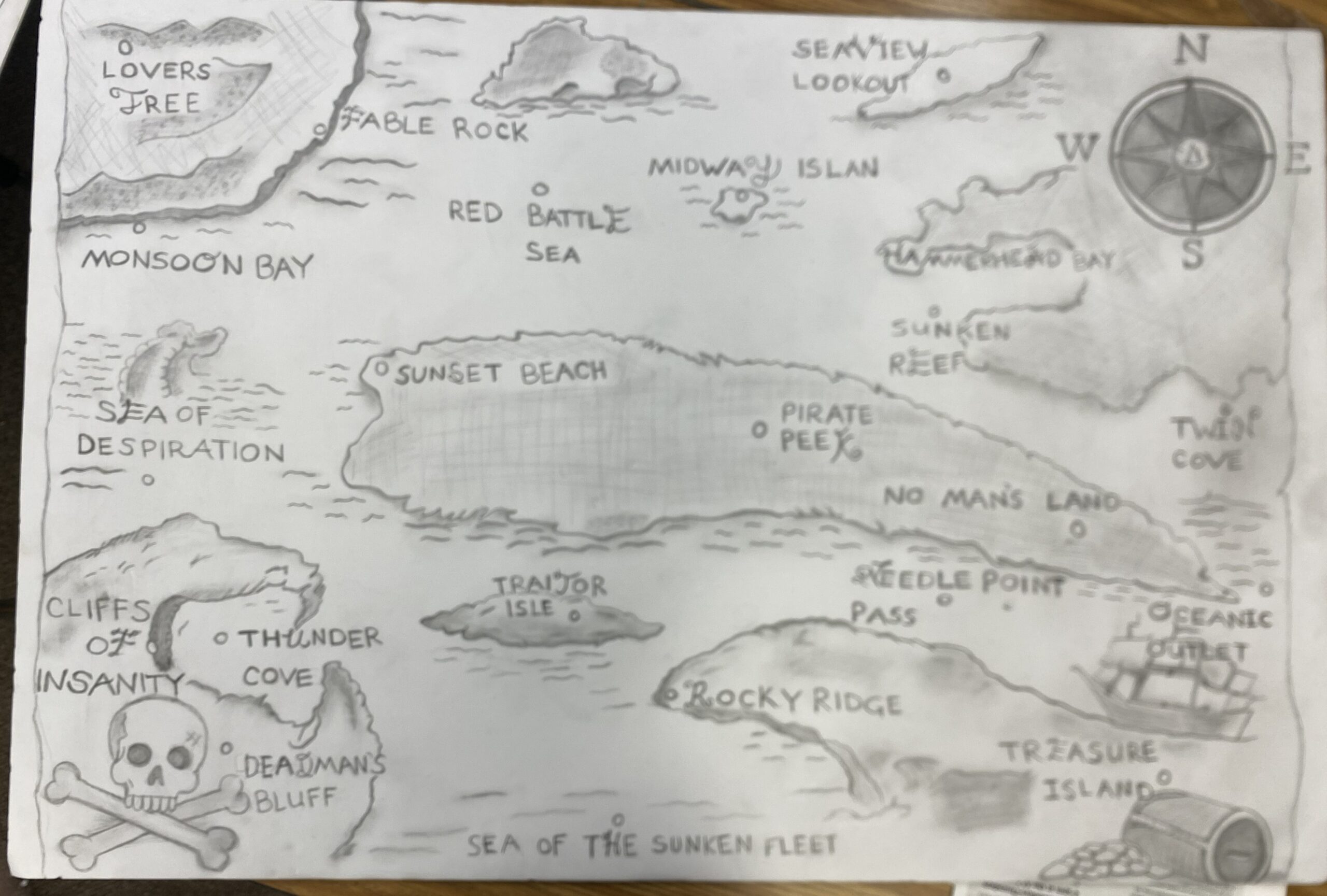
Pirate Map with Secret Code
Dinosaur Dentist
The town maze is a marble run that is actually pretty complex. The Pharaoh (below) actually holds the key to open the latch that lets the marble out. It goes through complex tunnels and pathways to get to the spot where it pushes the latch and opens a box on the bottom.
The second picture is called a Jefferson Wheel. It was invented by Thomas Jefferson in the 1790’s. It was designed to allow secret messages to be passed. The device consists of rotating disks, each featuring a scrambled alphabet. The two people have identical disks and the code will be a random order of letters but on the identical disk, it creates a row with the message on it. In our escape room, each puzzle gave them another disk so they could put it together. They will receive the code as well in one of the puzzles.
The Pirate map has it’s own secret code using one letter from each map spot. Putting the letters together gave the words to a number code.
The Dinosaur Dentist puzzle requires players to locate the dinosaur’s missing tooth. The other teeth have a switch inside that has to move and the missing tooth added in order to make the mouth open, revealing the box with the Jefferson Wheel inside.
Emperor’s Sarcophagus
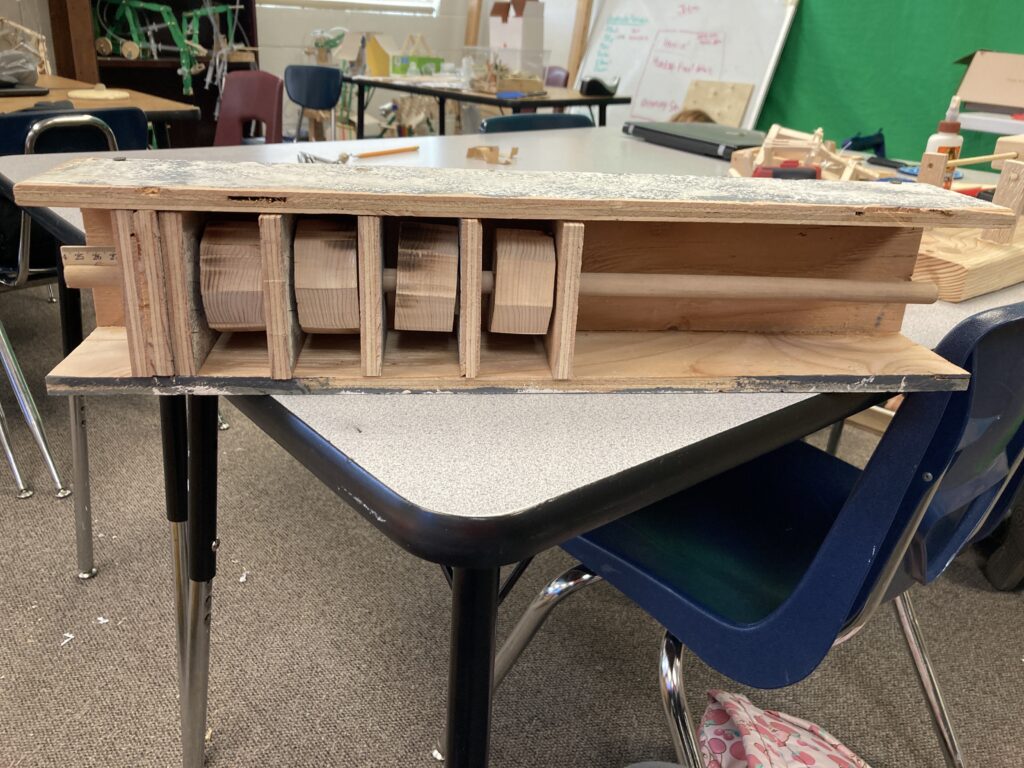
Locking Mechanism
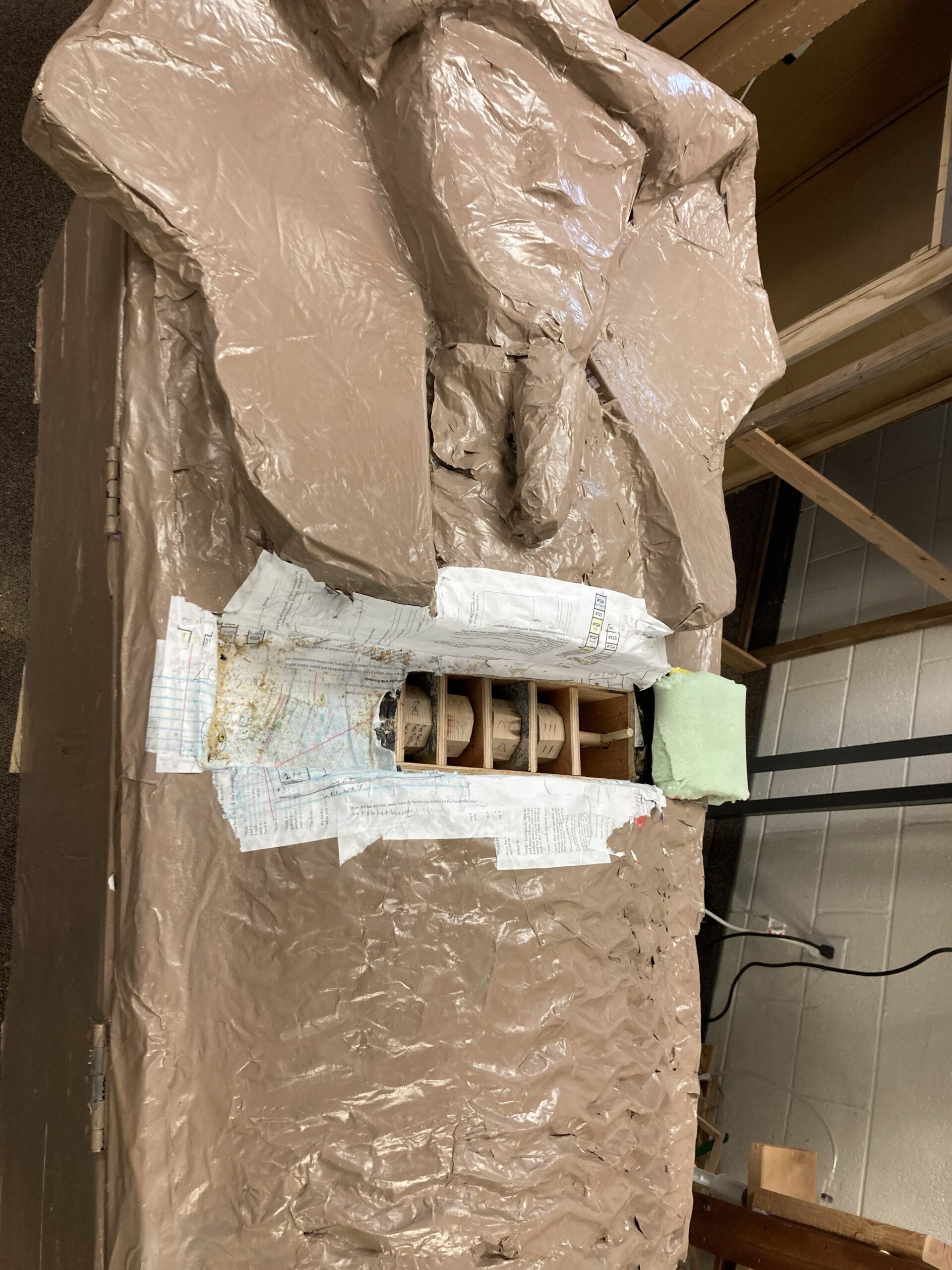
Pharaoh with Lock
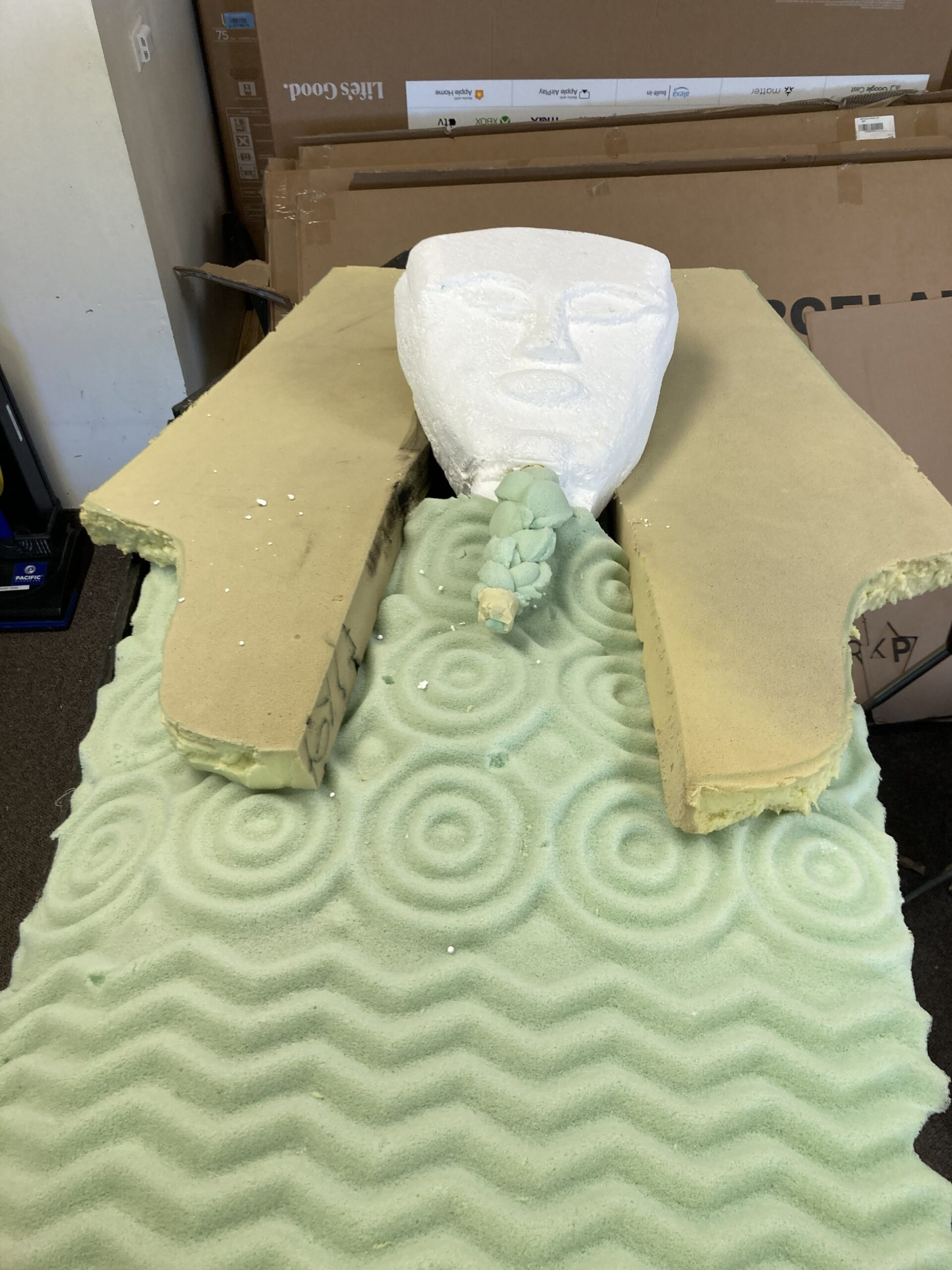
Pharaoh’s Sarcophagus
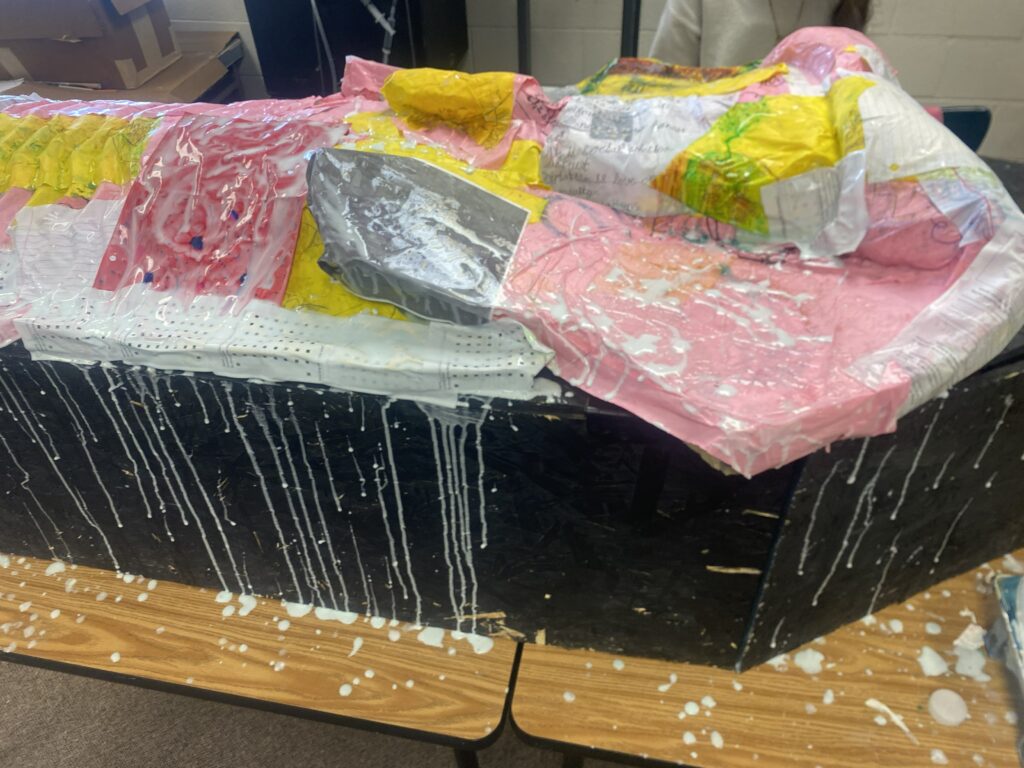
Papier Mache
Pharaoh’s tomb started with a simple plywood coffin used for the Halloween Scare Hall. I had a broken up bed mat that we used to round out the top. Foam for the Pharoh’ headdress and styrofoam sculpted with a burner to make the face. Then began the paper mache! it was very messy, but brought everything together and solidified. The base coat of paint was a tan color and it was spray painted with gold paint.
The locking mechanism was made with wood and 5 sided wheels. Each side has a picture on it and when you put the correct pictures in order it will open. They slide through the latch when in the right order.